![Charlie Frank [Creative]](http://images.squarespace-cdn.com/content/v1/5b45d70b55b02c82eea69030/5559eeb0-dbfb-43c4-b2dc-1040c0333bf8/Charlie+Frank+Logo+2.png)
Thought pieces
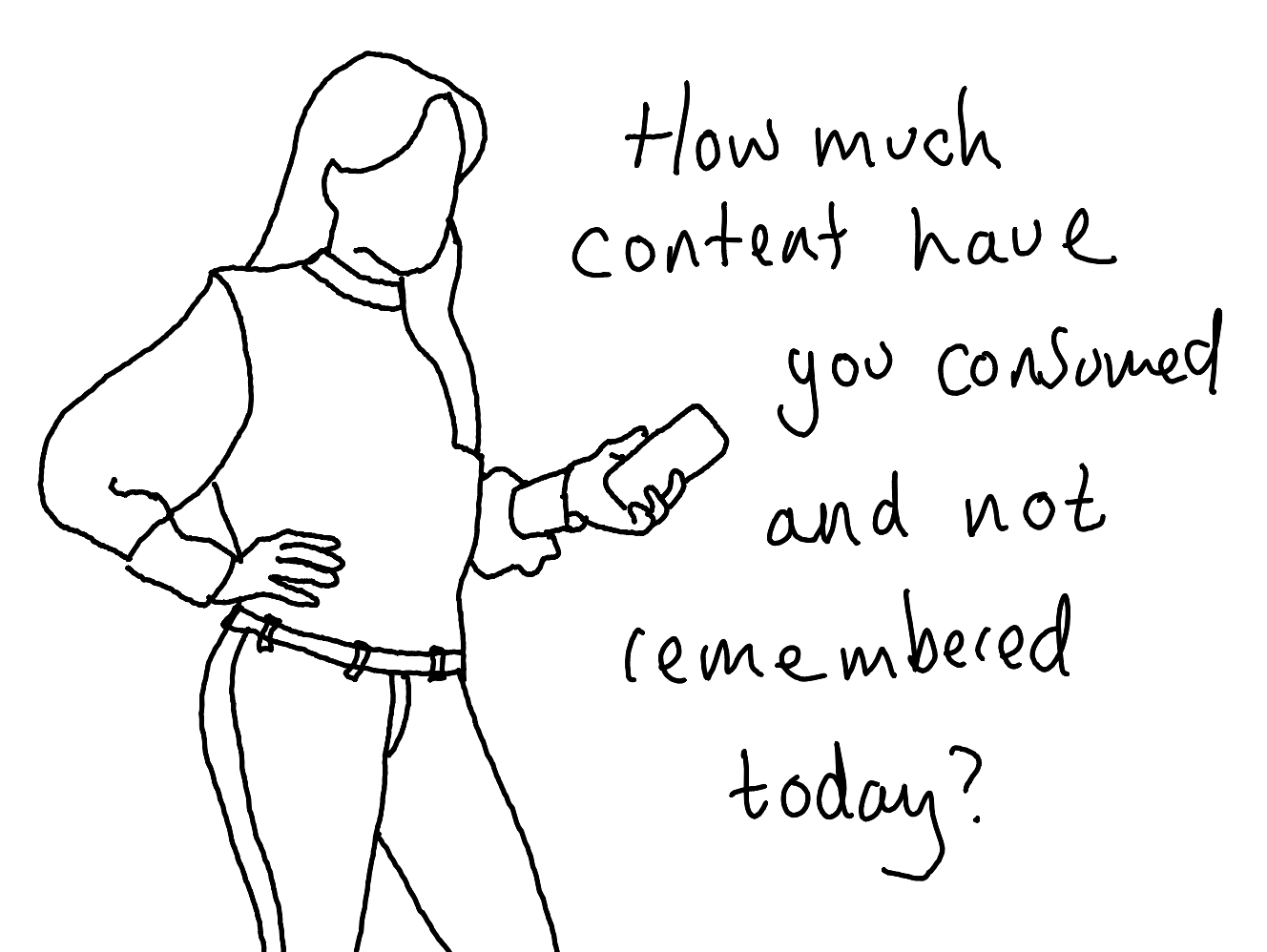
We talk a lot in social about hooks, thumb-stoppers, “watch to the end,” and optimised formats. And while all these elements are important, there's a truth we should be thinking about – consumers can scroll for hours and remember none of it. How often do you close TikTok and think, “What did I even just watch?” Exactly.
So even if your branded content nails every hook in the playbook and gets full view-through… it doesn’t automatically mean your brand has earned any memory. And if you’re not remembered, you’re not being chosen later.
This is why organic social media cannot depend solely on trends, formats, or attention-grabbing tactics. It must incorporate the same brand-building creativity that we expect from traditional advertising, to drive...
- Mental availability
- Distinctiveness
- Brand memory structures
Remember, “people watched it” does not equate to “people will recall it, recognise it, or prefer it.” Performance content might generate clicks, brand-building content creates future demand.
So, since social is where people spend their time, then social is also where brands need to invest in true creative brand building. Not just views.

Brands on social have two jobs, and while they sound contradictory, they’re actually complementary.
1) Stand out.
All the classic brand-building principles still matter. Distinctiveness drives recall. Attention drives growth. If you look and sound exactly like your competitors, you disappear into the noise. Brands win when they show up with originality, creativity and point of view – the stuff that makes people notice you and, crucially, remember you.
But on social, you also need to...
2)Fit in.
People open their apps to relax, scroll, laugh, learn – not to be hit by content that screams “I’m an advert!”
Native behaviour matters. Tone matters. Format matters. You need to look like you belong in the feed. Speak the platform’s language, respect the culture, and sit naturally alongside the content people actually came for.
Because the fastest way to make someone swipe on? Feeling out of place.
Great social brands do both.
They stand out through creativity and originality.
And they fit in by understanding the environment they’re entering.
Do those two things well and you earn the right to be seen, enjoyed, remembered – and acted on.
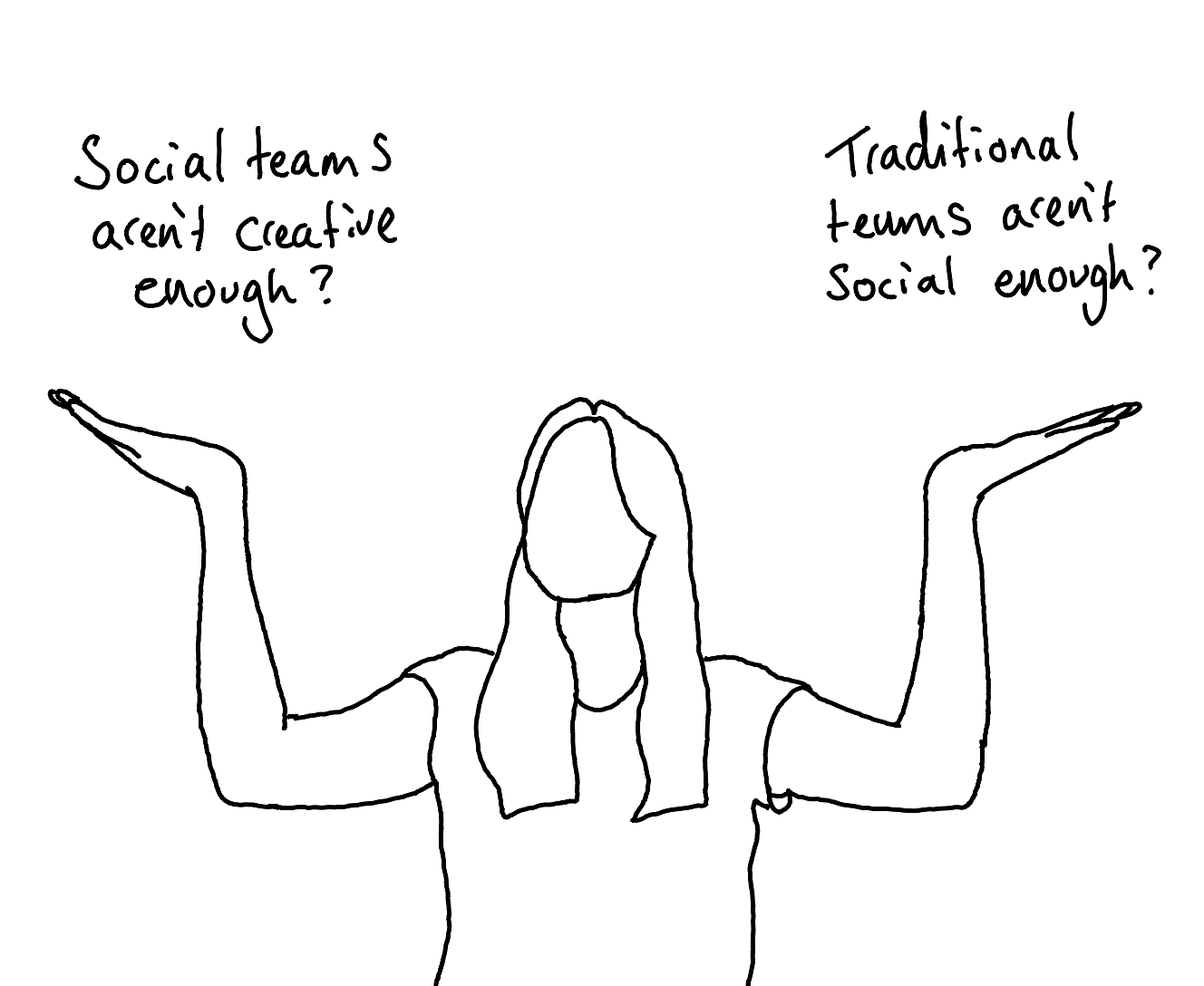
I've been engaging with both traditional ad shops and social-first agencies recently, and an intriguing pattern is emerging.
Social agencies keep telling me their teams "aren’t creative enough". Meanwhile, traditional agencies say their teams "aren’t social enough". And the more I hear this, the clearer it becomes – we don’t have a creativity problem or a social problem – we have a knowledge gap problem.
Because social isn’t a skill set. It’s a knowledge set.
If you’re a creative, you already have the ability to think, concept, and craft ideas. You can do social – you just need the understanding of the landscape, the platforms, the behaviours, the formats, the pace. That’s knowledge you build, not talent you’re born with.
So when traditional shops say their creatives struggle with social, is it really a capability issue?
Or is it simply that they’re not being given the time, training, or expectation to build that knowledge base?
And on the flip side, when social teams feel like they lack creativity, is that actually a hiring and development issue – one I’m increasingly being asked to help solve?
Maybe it’s time we stop treating 'social creativity' as some mystical, separate discipline. Great creatives can do social. Great social thinkers can be creative.
The gap is in the learning, not the talent.
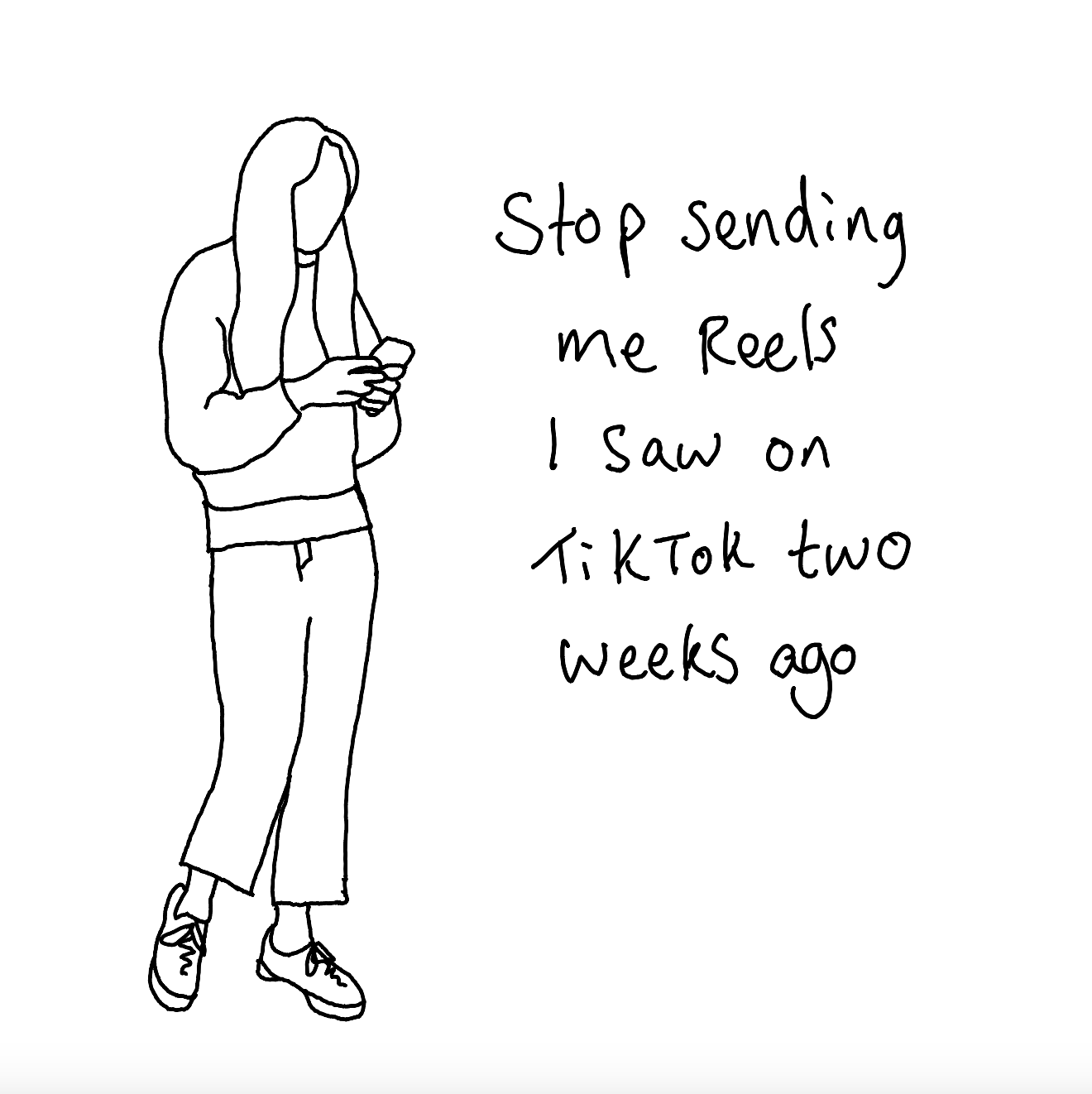
Sound familiar? Well, as irritating as this is, it does tell marketers something important. What's working on TikTok is working on other platforms.
I will always preach making deliverables bespoke for every channel, but if you've only got the investment – whether it's time or money – for one, make it TikTok. Cross-posting from TikTok is a user behaviour, so a TikTok, even with its watermark, doesn't look out of place on other platforms. And entertainment – TikTok's key principle – works everywhere.
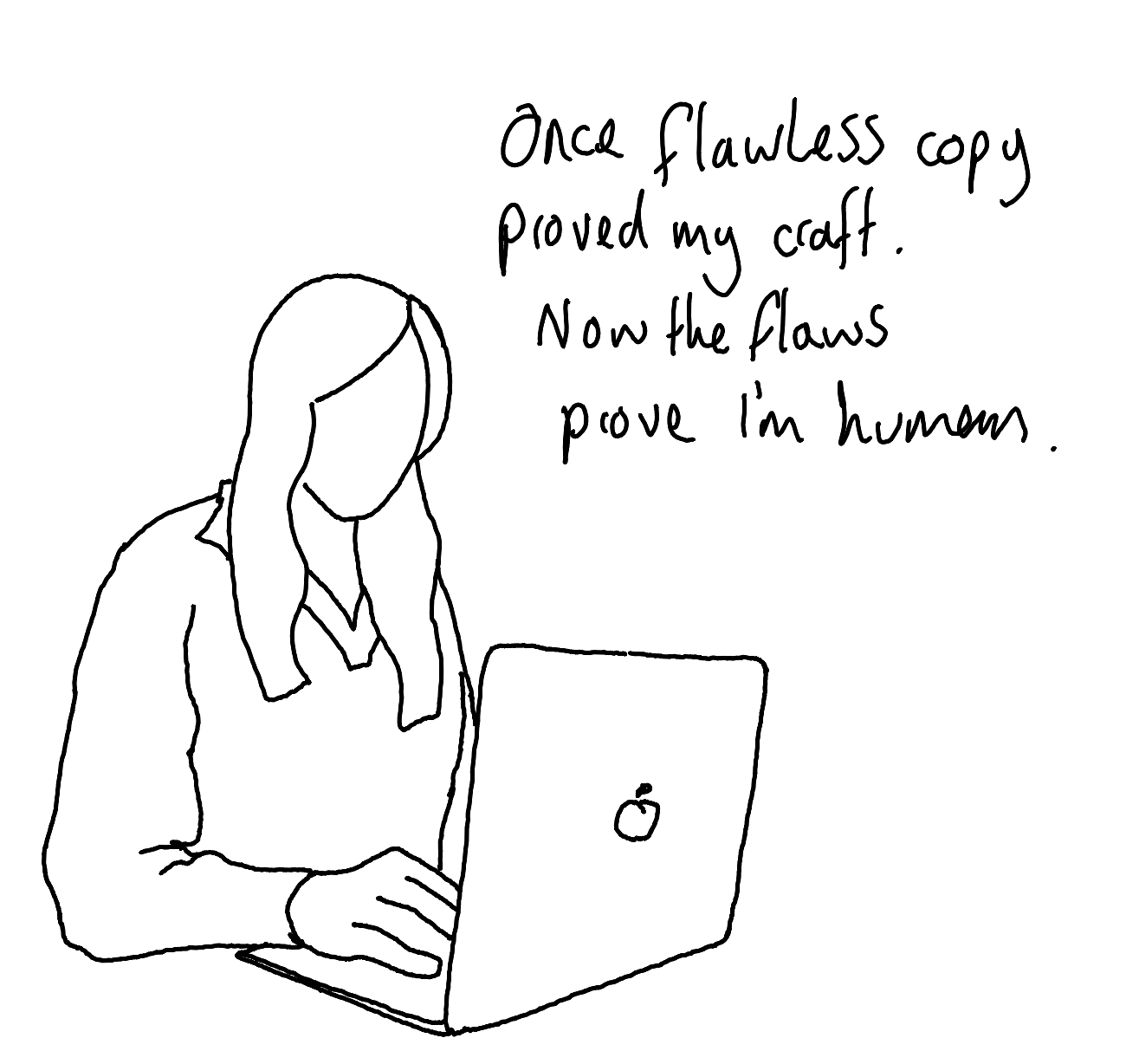
Once upon a time, being a great copywriter meant one thing – perfection.
No typos. No misplaced commas. Every sentence proofed within an inch of its life.
Part of your craft was measured in how spotless your copy was.
But now we’re in the era of AI – where anything perfectly polished could have been generated in three seconds flat.
And suddenly, the tiniest mistake… becomes a signal.
A clue.
A little wink that says, ‘A real human wrote this’.
It’s ironic that the very thing we were trained to eliminate has become proof of authenticity.
What an unusual place to land as a craftsperson – where imperfection doesn’t undermine your skill, it reveals it.
A reminder that behind the words sits an actual writer, thinking, choosing, shaping… not just prompting.
Organic social needs conceptual thinking more than ever.
Brands are getting lost in internet noise, and it doesn’t help when that’s all brands seem to be producing too.
Too many brands are publishing content, simply to publish content.
Remember companies create products and services, but brands tell stories. So let’s make sure we are, in fact, telling stories, not simply showcasing products or mindlessly recreating trends.
Consumers want to hear from you, but only when you have something to say.
So much focus has been placed on keeping consumers watching – but watching on doesn’t mean they value your brand (or even remember it). There’s a strong likelihood you’ve spent years and millions establishing what it is you want to say as a brand and who you want to talk to, so don’t let it all go just to keep up with the algorithm. Adapt it for social, but keep your value – keep storytelling.
I spoke to my team last week about sense-checking all their content with the question “What is this about?”. And if we can’t answer that, or it has no relevance to the brand or their audience, we don’t publish.
If organic social is going to strengthen your brand, it must be underpinned by the conceptual thinking you bring to all your brand comms. Out with internet fodder, in with conceptual content.

Still an unknown path for some marketers, influencer campaign can be incredibly valuable for brands. But influencers are not THE idea.
I believe in recruiting Influencers and Creators to be the production house, or the talent, or the creative, or the media platform – or, most likely, a mixture of all of these.
But simply sending an influencer your product or inviting them to use your service and share that experience with their audience isn’t enough.
I bring the conceptual thinking you’d expect from any advertising campaign to our influencer briefs, ensuring the comms they create offer value and meaning in line with the brand’s story.
I might work with an influencer to establish that concept, like working with Florence Given for Sharpie, she very much had a hand in the message we chose to deliver – but there was a message. And an emotive one at that. She didn’t just mindlessly use or review the product.
My influencer process isn’t a one-size-fits-all. I change my approach depending on the campaign idea or brand objective. But every single brief does have a conceptual thought behind it. Social-first marketing doesn’t mean ditching big brand thinking.
Extra short attention spans and super-fast decision-making – how can brands tap into the new way consumer brains are wired?
When was the last time you managed to concentrate on a book, or movie, or TV show without getting distracted? Will you even make it to the end of this article without glancing at your phone or out of the window? I certainly haven’t, I’m three lines in and have already checked my email twice and opened Instagram. But we needn’t feel bad about it, the evidence is there, social media and its constant stream of content is completely rewiring our brains and shrinking our attention spans.
But while our brains are struggling to maintain focus, something they remain very good at is decision-making.
The saying “first impressions count” exists for a reason. When we experience someone or something new we are able to decode those impressions subconsciously very quickly – and turn that into the recognisable good or bad ‘vibe’ we get from that person or situation. All our baggage from lived experience gets applied in seconds. The same is happening as we are being served content on social media – based on previous experience, will I be interested in this? First impressions absolutely count.
The real kicker though, particularly for brands trying to get viewers to digest and engage with their content and message in full is that, on socials, this decision gets made in 1.7 seconds.
1.7 seconds. That’s how long our brains are willing to commit to deciding whether to watch on or not, meaning that’s how long brands have to capture the viewer's attention.
The truth is, we’re growing impatient. The speed of the internet and the rate at which content is created, put before us and consumed has resulted in a populace who are used to experiencing digital media now, and quickly. If something doesn’t interest us immediately, our concentration will lapse, and we can just move on.
And it’s exactly this ability to ‘just move on’ that has, in part, created the problem. You might give a new TV show 15 minutes of your decision-making time because navigating back to the Netflix menu and choosing something else is a bigger barrier than the simple swipe-up that TikTok, Instagram, Reddit and Facebook offer us.
Consumers just aren’t willing to wait. Even a 100-millisecond delay in load time can decrease e-commerce conversion rates by up to 7%, while a two-second delay bumps this figure to 37%. In short, your audience doesn’t want to wait around for you to interest them, and neither should you.
So, you’ve made sure your content loads within 100 milliseconds; what can you do with the 1.7 seconds you now have to pique interest?
There are some tricks that we know work – motion and human faces, for example, are much more likely to grab attention – but thumb-stopping content isn’t an exact science yet. There is no recipe for success we can apply to get results. It’s like guessing what will go viral, it’s too human to estimate.
But a good starter is to tell your story in reverse.
If consumers are unwilling to wait for the pay off, give it to them in the first 1.7 seconds of your content. It may seem counterintuitive to give the ending away up front, like delivering the punchline before the joke setup, but actually it keeps viewers watching. Ever wondered why we watch the same movie over and over? Humans love to know how it’s going to end. It’s comforting.
Seeing the payoff first makes consumers want to know how you got there, which is actually nothing new. You only have to look at shows like Dragons Den or Made in Chelsea, where the ‘coming up’ preface before each episode gives you the show’s best bits to keep you watching.
So put a shot of the finished cake in before you start showing the baking process. Alternatively, you could pick up a hack that some creators have discovered, which is to add ‘watch till the end’ text over their footage. It doesn’t tell you what’s coming, just that it’s going to be good. Sneaky.
With the average Brit estimated to see well in advance of 5,000 ads per day, it’s more important than ever to make sure your content keeps people watching. If you’re not used to social ads, it might be worth wiping the slate clean; while good creative is still good creative, TV ad formats with linear narratives will quickly stumble on social. Think about the traditional TV spot, there’s time to tell a whole story to reel viewers in before revealing the product, and finally the logo. On social, with just 1.7 seconds to keep scrollers watching, this has to be flipped on its head.
Get that short attention span and quick decision-making working for you. Tell the audience who you are (your logo or brand name) and why they should keep watching (the ending) as early in your spot as possible.
Social media advertising is a great opportunity, and with e-commerce influence rising and rising every year; digital is the place to be.
Now is the time to experiment with these platforms and finesse the content you put out. The social landscape is ever-evolving and the consumer’s attention is there for the taking. You just have to be the one to catch it.